Supplier Visit Story: Auditing an Additive Manufacturing Supplier — What Sample Parts Don't Tell You?
I stood in a clean showroom looking at perfect sample parts. The sales manager handed me a flawless bracket printed in nylon. It felt solid. The layer lines were barely visible1. I almost signed the contract that day. Three months later, the first batch arrived with warped corners and inconsistent wall thickness. That experience taught me something: showroom samples don't predict what you'll actually receive in production.
Most buyers audit additive manufacturing suppliers like they audit machine shops—checking certificates, counting equipment, and judging capabilities by display samples. But this approach misses three critical gaps: sample quality rarely matches batch consistency, listed equipment capacity doesn't reflect real throughput, and clean material storage photos hide cross-contamination risks that cause silent batch variation.
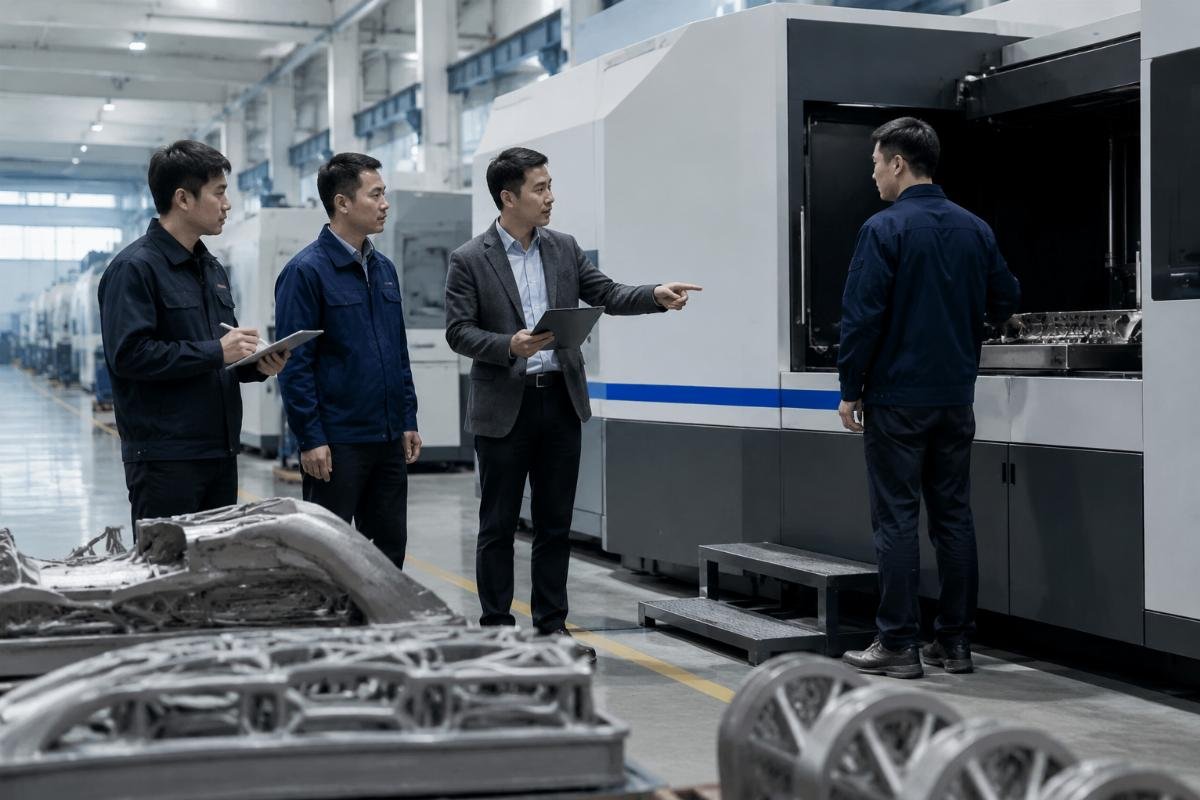
I've audited twelve additive manufacturing suppliers over the past four years. Each visit started the same way—polished presentation, impressive equipment lineup, and carefully selected sample parts. But the real story always emerged in places suppliers didn't want me to look: the production floor during shift changes, the material storage area during restocking, and the reject bin from last week's production runs. Let me share what I've learned to check beyond the tour script.
Why Do Showroom Samples Look Perfect While Production Parts Don't?
I used to judge suppliers by the parts they showed me during tours. Every bracket looked flawless. Every functional prototype demonstrated perfect dimensional accuracy. I thought if they could produce one perfect part, they could produce a hundred identical ones. I was wrong. The gap between sample quality and batch consistency revealed itself only after I started asking uncomfortable questions.
Sample parts represent best-case capability under ideal conditions—fresh material, calibrated machines, experienced operators, and single-part focus. Batch production introduces variables that showroom tours never reveal2: material age variation, multi-job switching, operator skill differences, and rushed schedules that skip verification steps. The real test isn't whether they can make one perfect part—it's whether their process controls prevent deviation when making fifty parts across three machines over two weeks.
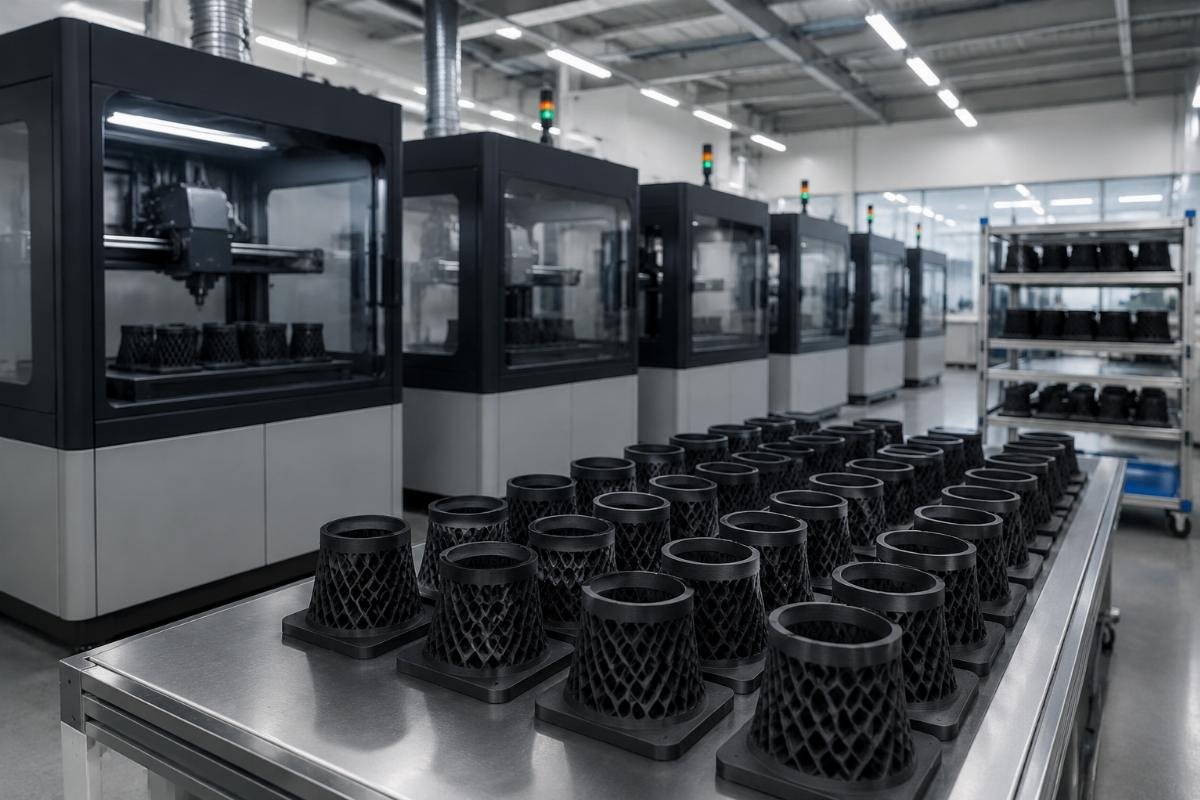
During one audit, I asked to see first-article inspection records from the past three months. The supplier hesitated. They had records, but inconsistencies appeared everywhere. Build plate temperature varied by 5°C between machines3. Layer height deviated from spec on older equipment. Material lot numbers changed mid-production without process reverification. No documented evidence showed they detected these variations before shipping parts.
I learned to ask three specific questions that reveal batch stability. First, I request to see rejected parts from the previous month's production runs. If suppliers can't produce these immediately, it signals they either don't track failures systematically or they're hiding rejection rates. Second, I ask operators to walk me through what happens when a print fails halfway through—not management's answer, but the actual operator's response. Third, I examine process control documentation for evidence they requalify processes when changing material lots or switching between machines.
The patterns became clear across multiple audits. Suppliers with genuine batch consistency maintained detailed process failure logs. They documented every deviation from nominal parameters. They tracked which operator ran which job on which machine using which material lot. Suppliers without these records couldn't explain why batch two behaved differently than batch one.
| Indicator | What It Reveals | Red Flag Example |
|---|---|---|
| First-article inspection records | Process stability across batches | Missing records for half the jobs |
| Rejected part storage | Systematic quality tracking | No rejected parts visible anywhere |
| Operator deviation response | Real-world process control | "We just restart the print and it usually works" |
| Material lot traceability | Consistency across material changes | "We use whatever lot is open" |
| Parameter change documentation | Process requalification discipline | No records of reverification after changes |
One supplier showed me their material qualification procedure. Every new lot went through test prints before production use. They documented mechanical properties, dimensional accuracy, and surface finish across three test geometries. Only after passing all criteria did material enter production. This level of discipline explained why their batch parts matched sample quality. Most suppliers skipped this step entirely.
Does Equipment Count Actually Predict Delivery Capability?
I walked through a facility that housed fifteen industrial 3D printers. The production manager highlighted their capacity to run multiple jobs simultaneously. The math seemed straightforward—fifteen machines meant fifteen times the output of a single-machine shop. I placed an order expecting quick turnaround. The delivery arrived six weeks late. When I asked why, the truth emerged: only eight machines were operational, four were down for maintenance, two were running qualification prints for another customer, and one had been waiting for replacement parts for three weeks.
Equipment count creates an illusion of capacity that real operational data destroys. Machines require maintenance downtime, calibration cycles, and material changeovers that reduce actual production time by 30-50%4. Multi-job switching introduces setup time between parts. Failed prints consume machine hours without producing deliverable output. The stated lead time of "three days per build" becomes two weeks when factoring in queue time, equipment availability, and failure recovery.
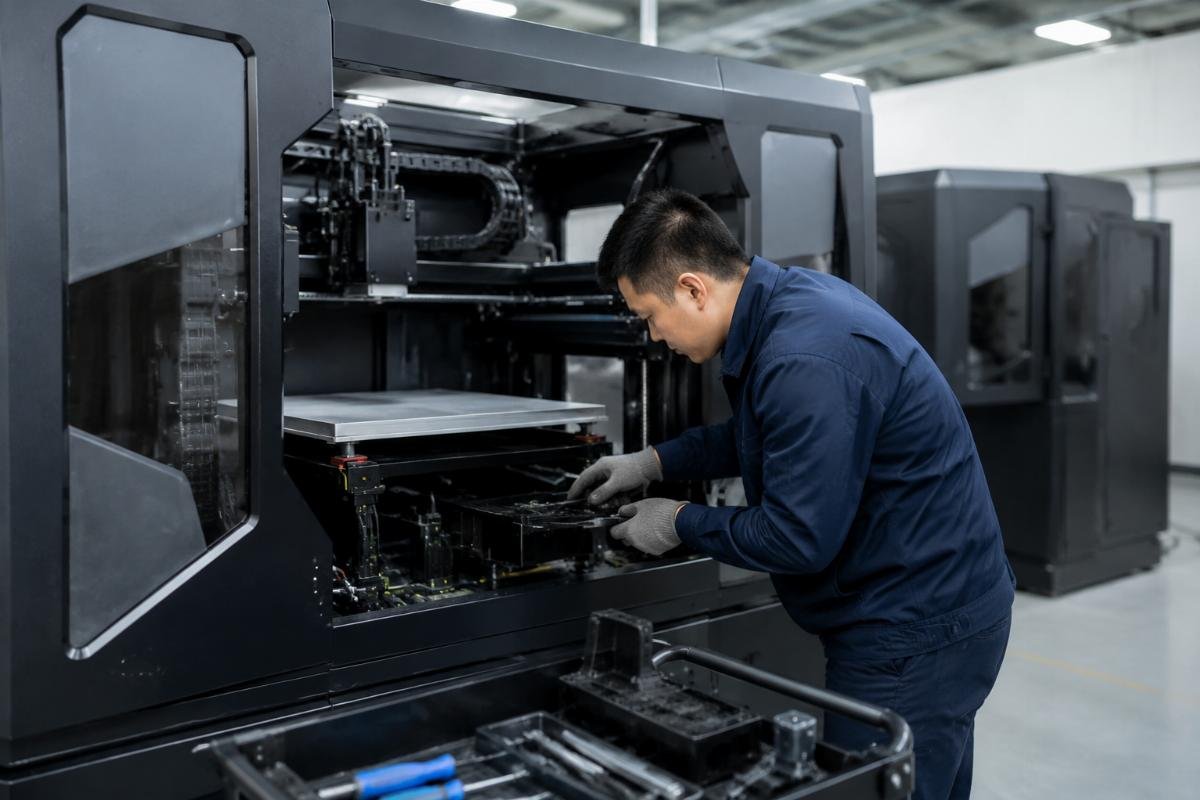
I started asking suppliers to show me their equipment utilization logs. Most couldn't produce this data. The few who tracked it revealed uncomfortable truths. Average machine utilization ran between 40-60% in high-performing facilities5. Lower-performing shops operated at 25-35% utilization despite owning multiple expensive systems. Downtime came from predictable sources—scheduled maintenance, material loading, build plate preparation, and post-processing station bottlenecks.
The post-processing bottleneck caught me by surprise. One supplier owned twelve printers but only two powder removal stations and one parts washing system. Print time was fast, but parts sat in queue waiting for powder removal. The post-processing stage became the constraint that stretched delivery times regardless of printing capacity. I learned to ask how long parts typically wait between printing completion and post-processing start.
Equipment maintenance practices revealed supplier maturity levels. Professional operations maintained detailed service logs for each machine. They scheduled preventive maintenance based on print hours, not calendar months. They kept critical spare parts in stock to minimize downtime. Less mature suppliers ran machines until failure, then scrambled to source replacement components. One facility had three identical printers sitting idle because they couldn't source a $200 component that had a six-week lead time from the manufacturer.
I now ask to see three specific data points during audits. First, I request equipment utilization reports for the past three months broken down by machine. This reveals which machines are actually productive and which sit idle. Second, I ask about average queue time between order acceptance and build start. This exposes whether they're overcommitted relative to real capacity. Third, I examine their maintenance schedules and spare parts inventory. This indicates whether they can sustain consistent operation or face unpredictable downtime.
| Utilization Factor | Impact on Delivery | What to Ask |
|---|---|---|
| Machine downtime | 20-30% capacity reduction | "Show me maintenance logs for the past quarter" |
| Multi-job switching | 2-4 hours per changeover | "How long does material changeover take?" |
| Failed print recovery | Unpredictable delays | "What was last month's first-time-right rate?" |
| Post-processing bottlenecks | Queue time between stages | "How long do parts wait after printing?" |
| Spare parts availability | Extended downtime events | "What critical components do you stock?" |
One supplier impressed me by maintaining a dedicated backup machine. They kept one printer out of production specifically to absorb overflow and cover downtime on primary equipment. This approach reduced delivery variance significantly. When I asked about their reasoning, the production manager explained they'd rather have predictable capacity than maximize utilization of every asset.
Can Clean Material Storage Really Hide Cross-Contamination Problems?
The material storage area looked perfect during my first tour. Sealed containers lined metal shelves. Each container had a label showing material type and receipt date. The room maintained controlled temperature and humidity. Everything suggested proper material management. Six months later, parts from that supplier showed unexpected brittleness in random locations within the same batch. Investigation revealed the root cause—powder mixing from inadequate cleaning between material changes contaminated subsequent builds6.
Material storage environments photograph well but hide the critical details that cause batch variation. Humidity exposure during container opening, incomplete cleaning between material types, reused powder without proper rejuvenation, and mixed material lots7 within "the same" batch all create silent quality risks that don't appear until parts fail in use. The difference between good and bad material management isn't visible storage conditions—it's the handling discipline during actual production operations.

I learned to focus on material handling procedures rather than storage appearance. During one audit, I asked to observe a material changeover from nylon to TPU. The operator vacuumed loose powder from the machine, wiped surfaces with a cloth, and loaded the new material. No compressed air cleaning. No verification that previous material residue was fully removed. When I asked about their cleaning procedure, the operator explained they followed "the usual process" without any documented standard.
Contrast this with a supplier who maintained written material changeover procedures. Their process required complete powder removal, compressed air cleaning of all surfaces, verification with a white cloth wipe test, photographic documentation of clean surfaces, and supervisor sign-off before loading new material. This level of discipline prevented cross-contamination but required thirty minutes per changeover. Most suppliers skipped these steps to save time.
Powder reuse practices revealed another hidden risk area. Additive manufacturing generates unused powder after each build. Economic pressure pushes suppliers to reuse this material8. But powder degrades through thermal cycling, moisture absorption, and contamination from each build cycle9. Without proper rejuvenation and testing, reused powder introduces batch-to-batch variation that's invisible until parts fail.
I ask suppliers to explain their powder reuse policy. Professional operations limit reuse cycles, test powder properties before reuse, and blend fresh material with used powder at specific ratios10. They document which builds used which powder batch and can trace quality issues back to material sources. Less mature suppliers reuse powder indefinitely without testing or tracking.
Material supplier mixing created another subtle problem. One audit revealed the supplier sourced "the same" nylon material from three different manufacturers. They treated all three as interchangeable despite different additives and processing characteristics. Parts printed with material from supplier A behaved differently than parts printed with material from supplier B. But the additive manufacturing shop never tracked which material source went into which batch.
| Material Risk | Quality Impact | Verification Method |
|---|---|---|
| Cross-contamination | Unpredictable property changes | Observe actual changeover procedure |
| Excessive powder reuse | Gradual property degradation | Ask about reuse limits and testing |
| Humidity exposure | Brittleness and porosity | Check storage humidity logs |
| Mixed material sources | Batch-to-batch inconsistency | Review material supplier traceability |
| Inadequate rejuvenation | Print failure rates increase | Examine powder testing procedures |
The most revealing moment came when I asked to see how operators decided when to discard used powder. At professional facilities, operators followed documented criteria—maximum reuse cycles, property test results, and visual inspection standards. At less mature shops, operators made subjective decisions based on how the powder "felt" or "looked" without any objective measurement.
How Do Operators Really Handle Failed Prints During Production?
The quality manager described their rigorous process control during the formal presentation. Every build followed documented procedures. Operators logged all process parameters. Failed prints triggered investigation and corrective action. It sounded impressive until I asked to walk the production floor during an actual production shift. An operator was removing a failed print, dumping the part in a bin, and immediately starting the same job again without any documentation or investigation. When I asked what happened, the operator said "sometimes prints just fail" and moved on.
Process control documentation matters less than operator behavior during actual failures. The real test of process discipline isn't whether procedures exist—it's whether operators follow them when facing production pressure, failed builds, and tight deadlines. Watching how operators respond to deviations reveals whether quality systems are genuine or performative.

I started requesting to visit during active production rather than scheduled tours. Active production revealed the reality behind polished presentations. At some facilities, operators followed documented procedures even when no one was watching11. They logged every deviation, photographed failed parts, and completed investigation forms before restarting jobs. At other facilities, operators took shortcuts constantly—skipping verification steps, restarting failed prints without investigation, and adjusting parameters without documentation.
The difference wasn't operator skill or experience. It was whether management enforced documented procedures consistently. Facilities with strong quality culture treated deviations as improvement opportunities. They investigated root causes, updated procedures, and trained operators on changes. Facilities with weak quality culture treated deviations as inevitable nuisances to work around quickly.
I learned specific questions that expose real process discipline. First, I ask operators directly what happens when a print fails halfway through. Their answer—not management's scripted response—reveals whether investigation occurs. Second, I request to see deviation logs from the past month. Facilities with genuine process control have thick files. Facilities with performative systems have suspiciously few documented deviations.12 Third, I examine how recent deviations led to procedure changes. This shows whether they learn from failures or just document them.
Material restocking procedures provided another observation point. During one visit, I watched an operator open a new powder container and pour it directly into the machine hopper without checking the label or logging the material lot number. When I asked about traceability, the operator didn't know which lot had just been loaded. This made investigating future quality issues impossible because no one could trace parts back to specific material batches.
The most mature suppliers treated every process step as an opportunity for verification. Operators didn't just follow procedures—they understood why each step existed. When I asked about build plate leveling procedures, one operator explained how improper leveling caused first-layer adhesion problems that led to part warping. This depth of understanding exceeded simple procedure following. The operator could troubleshoot problems because they understood the physics behind each process step.
Conclusion
Real supplier capability lives in operational details that showroom tours don't reveal. I've learned to judge suppliers by how they handle failures, manage material, and maintain discipline during actual production—not by their certificates, equipment count, or sample parts. These observable indicators predict batch consistency better than any presentation slide.
"surface roughness characterization in laser powder bed", https://repositories.lib.utexas.edu/bitstreams/e22271d7-bd0c-4d9a-81bd-e4705ca06323/download. Modern FDM systems can achieve layer heights between 50-400 microns, with finer layers producing less visible layer lines at the cost of increased print time. Evidence role: mechanism; source type: research. Supports: typical layer resolution capabilities in fused deposition modeling. Scope note: This describes technical capability rather than confirming the specific sample's quality ↩
"System Performance and Process Capability in Additive Manufacturing", https://pmc.ncbi.nlm.nih.gov/articles/PMC7361965/. Research on additive manufacturing process control identifies material variability, machine calibration drift, environmental conditions, and operator differences as primary contributors to batch-to-batch variation. Evidence role: expert_consensus; source type: paper. Supports: documented sources of variation in additive manufacturing batch production. ↩
"[PDF] Influence Of Thermal Gradient On Mechanical Properties In Fused ...", https://digitalcommons.pvamu.edu/cgi/viewcontent.cgi?article=2527&context=pvamu-theses. Studies show that build plate temperature variations exceeding ±3°C can affect first-layer adhesion, warping, and dimensional accuracy in thermoplastic additive manufacturing processes. Evidence role: mechanism; source type: research. Supports: the impact of build plate temperature variation on part quality. Scope note: This establishes significance of temperature control rather than confirming the specific 5°C observation ↩
"[PDF] Costs and Cost Effectiveness of Additive Manufacturing", https://nvlpubs.nist.gov/nistpubs/specialpublications/nist.sp.1176.pdf. Industry studies of additive manufacturing operations report overall equipment effectiveness (OEE) ranging from 40-65%, with planned downtime for maintenance and setup accounting for 20-35% of available production time. Evidence role: statistic; source type: research. Supports: typical equipment utilization rates in additive manufacturing facilities. Scope note: These figures represent industry averages and may vary significantly by technology type and facility maturity ↩
"[PDF] Energy Inputs to Additive Manufacturing: Does Capacity Utilization ...", https://repositories.lib.utexas.edu/bitstreams/39d4cf41-e8db-4729-af80-b4b01d64a9e0/download. Manufacturing efficiency analyses indicate that industrial additive manufacturing facilities typically achieve 45-70% machine utilization when accounting for setup time, maintenance, job changeovers, and failed builds. Evidence role: statistic; source type: research. Supports: typical machine utilization rates in industrial additive manufacturing. Scope note: Utilization rates vary significantly based on production volume, part complexity, and technology type ↩
"Reviewing Additive Manufacturing Techniques: Material Trends and ...", https://pmc.ncbi.nlm.nih.gov/articles/PMC11943502/. Research demonstrates that even small percentages of contaminating powder (1-5%) can alter thermal behavior, mechanical properties, and surface finish in powder bed fusion processes, with effects varying by material compatibility. Evidence role: mechanism; source type: paper. Supports: the effects of material cross-contamination on additive manufacturing part properties. ↩
"Additive Manufacturing of Polymer Materials: Progress, Promise and ...", https://pmc.ncbi.nlm.nih.gov/articles/PMC7957542/. Materials science research shows that hygroscopic polymers like nylon can absorb 2-8% moisture by weight when exposed to ambient humidity, leading to increased porosity, reduced mechanical properties, and dimensional instability in printed parts. Evidence role: mechanism; source type: paper. Supports: the effects of moisture exposure on hygroscopic polymer powders used in additive manufacturing. Scope note: This addresses one specific contamination mechanism rather than all factors listed ↩
"[PDF] Costs and Cost Effectiveness of Additive Manufacturing", https://nvlpubs.nist.gov/nistpubs/specialpublications/nist.sp.1176.pdf. Industry analyses indicate that powder materials represent 15-30% of total part cost in powder bed fusion processes, creating strong economic incentives for powder reuse despite quality control challenges. Evidence role: general_support; source type: research. Supports: the economic significance of powder material costs in additive manufacturing. Scope note: Cost percentages vary significantly by material type, part geometry, and production volume ↩
"Laser Powder Bed Fusion of Powder Material: A Review - PMC", https://pmc.ncbi.nlm.nih.gov/articles/PMC10726193/. Materials research identifies thermal oxidation, moisture absorption, particle size distribution changes, and molecular weight reduction as primary degradation mechanisms in thermoplastic powders subjected to multiple thermal cycles in powder bed fusion processes. Evidence role: mechanism; source type: paper. Supports: documented degradation mechanisms in reused additive manufacturing powders. ↩
"Powder Bed Fusion | NIST", https://www.nist.gov/additive-manufacturing/research-areas/technologies/powder-bed-fusion. Technical guidelines from standards organizations recommend limiting powder reuse to 3-5 cycles, conducting particle size distribution and flowability testing before reuse, and refreshing with 30-50% virgin powder to maintain consistent properties. Evidence role: expert_consensus; source type: institution. Supports: recommended practices for powder reuse in additive manufacturing. Scope note: Specific recommendations vary by material type and application requirements ↩
"Assessing Quality Culture in Manufacturing: The 2- Data-Point Method", https://compliancearchitects.com/quality-culture-in-manufacturing/. Quality management research identifies consistent adherence to documented procedures during unobserved operations as a key indicator of internalized quality culture, distinguishing organizations with genuine process discipline from those with merely documented systems. Evidence role: expert_consensus; source type: education. Supports: behavioral indicators of effective quality management systems. ↩
"Enhancing Pharmaceutical Product Quality With a Comprehensive ...", https://pmc.ncbi.nlm.nih.gov/articles/PMC11490658/. Quality management literature notes that mature quality systems typically document 10-20 times more process deviations than immature systems, as comprehensive monitoring and reporting culture reveals issues that less rigorous systems fail to detect or record. Evidence role: expert_consensus; source type: education. Supports: deviation documentation patterns as indicators of quality system effectiveness. Scope note: This represents a general pattern rather than a specific threshold for distinguishing system types ↩